
The maritime industry is one of the key pillars of global trade, with over 90% of goods being transported by sea. However, the environmental impact of shipping, including air pollution, greenhouse gas emissions, and marine pollution, has led to increasing concerns from governments, businesses, and environmentalists. As the world seeks to combat climate change and achieve sustainability goals, the shipping industry is undergoing a transformation, driven by innovations in technology and shifting global regulations.
This article explores the emerging trends and cutting-edge technologies that are shaping the future of sustainable shipping. It looks at how the industry is responding to environmental challenges, the role of alternative fuels, and the impact of regulatory frameworks in driving change.
1. The Need for Sustainability in Shipping
The shipping industry has long been recognized for its essential role in moving goods across the globe, but its environmental footprint cannot be ignored. According to the International Maritime Organization (IMO), the shipping sector accounts for approximately 2-3% of global CO2 emissions. This has led to growing pressure from environmental groups and governments to reduce emissions and adopt greener technologies.
The shipping industry’s contribution to global pollution, particularly air pollution from ship engines and marine pollution due to oil spills and plastic waste, has sparked a revolution toward sustainable practices. In response, new technologies, fuel sources, and policies are being developed to mitigate the environmental impact of the industry.
2. Green Shipping Technologies: From Alternative Fuels to Energy-Efficient Designs
One of the most significant shifts in the maritime industry is the transition to alternative fuels. Traditional marine fuel, such as bunker oil, is a major contributor to the industry’s carbon emissions. However, sustainable fuels such as Liquefied Natural Gas (LNG), biofuels, and hydrogen are emerging as viable alternatives. These fuels have lower carbon emissions and can significantly reduce the impact of shipping on the environment.
In addition to alternative fuels, the maritime industry is also investing in energy-efficient ship designs. Advanced hull designs, air lubrication systems, and wind-assisted propulsion are just a few examples of innovations that aim to reduce fuel consumption and increase efficiency. For instance, the use of rotor sails (wind-assisted propulsion) and solar panels on vessels are becoming more common, helping reduce reliance on traditional fuel sources.
3. Autonomous Ships and Digitalization: A New Era of Efficiency
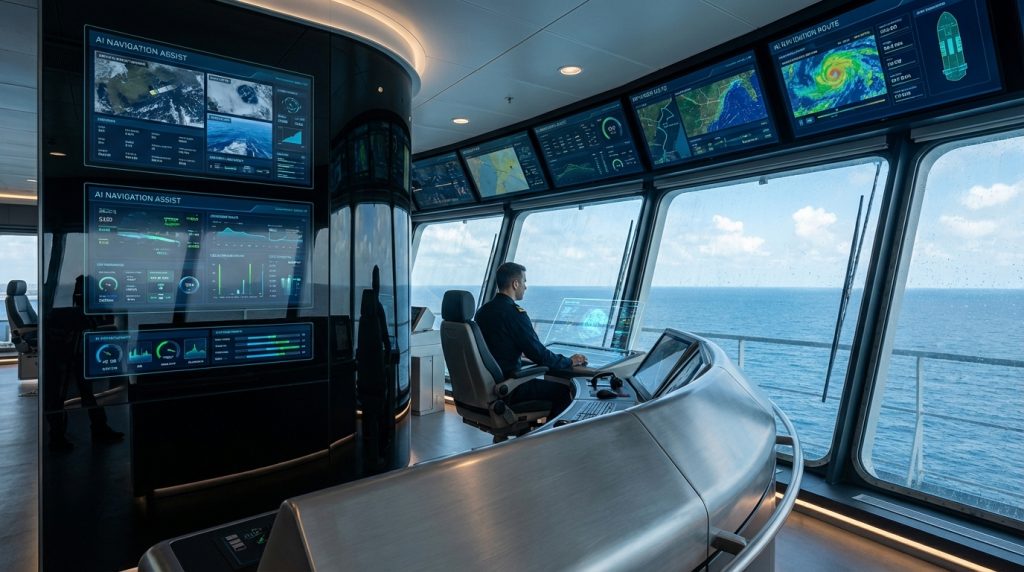
Another trend driving the future of sustainable shipping is the rise of autonomous ships. These vessels are equipped with advanced sensors, cameras, and artificial intelligence (AI) systems that allow them to navigate without human intervention. By reducing the risk of human error, autonomous ships can improve safety and efficiency, ultimately reducing fuel consumption and emissions.
Moreover, digitalization is playing an increasingly important role in optimizing maritime operations. Real-time data collection, predictive analytics, and blockchain technology are helping ship operators make better decisions regarding fuel usage, routing, and cargo handling. By harnessing big data, the industry can reduce waste, improve supply chain efficiency, and lower carbon emissions, ultimately contributing to a more sustainable future.

AQUA SUL SHIPPING : Your trusted partner for reliable, efficient, and sustainable global shipping solutions.
4. Regulatory Pressure: International Standards and Compliance
As sustainability becomes more critical, international regulatory bodies are introducing stricter environmental standards. The IMO 2020 sulfur cap, which limits the sulfur content of marine fuel to 0.5%, is one such regulation aimed at reducing air pollution from ships. In addition, the IMO has set ambitious targets for reducing greenhouse gas emissions from shipping, including a target to cut emissions by 50% by 2050 compared to 2008 levels.
These regulations are driving the adoption of greener technologies and pushing shipping companies to invest in more sustainable practices. As governments around the world continue to tighten environmental regulations, the maritime industry will be required to comply with stricter standards, accelerating the adoption of cleaner technologies and more sustainable operational practices.
5. The Role of Green Ports: Sustainable Practices Beyond the Ship
Sustainability in shipping doesn’t stop with the vessels themselves; ports play a crucial role in the overall environmental impact of the industry. Green ports are being developed worldwide, focusing on energy efficiency, waste reduction, and the use of renewable energy sources. These ports are designed to reduce emissions, minimize water consumption, and improve the overall environmental performance of port operations.
For example, many ports are implementing shore power systems that allow ships to plug into the electrical grid while docked, reducing the need to run onboard engines and cutting emissions. Ports are also adopting electric cranes and automated systems to streamline cargo handling, further reducing fuel consumption and carbon emissions.
6. The Path Forward: Collaboration and Innovation
The shift toward sustainable shipping requires a collaborative effort from all stakeholders, including shipping companies, port authorities, regulators, and technology providers. Collaboration is essential in developing and implementing the technologies and solutions needed to achieve a sustainable maritime industry.
The future of shipping lies in the continued development of sustainable technologies, the adoption of alternative fuels, and the integration of digital tools that optimize operations. As these innovations continue to evolve, the industry will play a vital role in reducing global emissions and achieving the climate goals set by international agreements such as the Paris Agreement.
Conclusion: A Sustainable Future for Maritime Transport
Sustainable shipping is no longer a distant goal; it is the future of the maritime industry. Driven by technological innovation, regulatory changes, and the growing demand for eco-friendly practices, the industry is undergoing a transformation that will make global shipping more efficient, cleaner, and environmentally responsible. By embracing alternative fuels, autonomous systems, and digital technologies, the maritime sector is paving the way for a greener future.
At the same time, the industry must continue to collaborate across borders and sectors to ensure that sustainability remains a priority. The path to a sustainable maritime future will require the collective efforts of all those involved in the supply chain, but the rewards—reduced emissions, improved efficiency, and a cleaner planet—will be well worth the effort.